Friday, December 29, 2023

Escape from Lockdown: Dartmoor


In the dark, wet, late December days just before the Alpha lock down, we managed to escape to a isolated 17th century barn near Manaton, in the heart of Dartmoor. We nearly didn’t arrive. Taking a wrong turn on the sat nav at night in a yellow warning rainstorm sparked a real adventure. Careering down tiny, single lanes, which had turned into cascading streams, trying to not skid into the eight-foot hedges and praying that no cars would come the other way. The water hit the windscreen in such buckets that the wipers gave no rest bite. We resorted to driving as much by the map as the road, calling out turns rally style (quarter turn left in 200 m….). Without a doubt the most treacherous driving I have ever encountered in the UK. We were very relieved to arrive and the wrong side of frazzled.

We spent the next four days in isolated bliss. We trekked for hours, over tors, across moors and down through pockets of ancient oak rainforest. The place had a real mythical touch to it in the mists of winter. We would arrive home just before dark, knackered and soaked, but happy, having barely seen another soul all day. We had brought enough food in the boot to last our stay, so spent the evening fuelling up, playing board games and decompressing.

First up was a trek straight out our door. One turn and we were on to a high banked farm track, leading us gently to the foot of Bowerman’s Nose, via irregular shaped fields and the odd cow. The lower slopes were covered in a moss strewn wood, the trees seeming shrunk by their epiphyte burden. We emerged onto more open hillside and trekked upwards, slipping on the sand and stone. It felt so good, to be away from home. Hitting the peak, the wind was up and up, momentarily washing away some of the troubles of the past months. It was the type of wind that pins your hair back and flaps against the cheeks. Standing was a struggle, especially for the small ones. Leaning far forward into the gusts and grasping the kids’ hands, we drove forward and found shelter behind the giant bounders, peering out now and then to take sight of the vast expanse of bleak moors to the West.

Of the several peaks we visited, my favourite was Hound Tor. It was both the far point and highlight of a wonderful 15 km circular trek from our barn. The trek up through the sodden moor was relieved by sunshine at the summit, a brief god send in the dark months. Complete with spectacular views over the shifting land and adorned by huge hunks of granite that the kids could clamber over, the peak proved a perfect place for a well-earned lunch (which we took sheltered under the rocks). Coming back down the other side, but still high on the hill, we fell upon the remains of an abandoned medieval village. As the kids crawled all over the abandoned stone walls, I felt a sharp eeriness to the place. Lonely, wind swept and long forgotten. A strange place to visit in such strange times.

The peaks were balanced out by walks along the farmed valley floors, rivers and ravines. Eastern Dartmoor is such a wonderful patchwork of contrast. Nothing was though quite like our trek along and above the river Bovey. Running through old woodland and steep ravine. Without knowing it at the time, we had stumbled upon one of the rare remaining patches of British Atlantic rainforest. Oak, damp, and overarching branches covered in dripping moss, lichen and fern. A place to inspire fantasy. I am not religious, or even spiritual, but this placed stirred something inside. Leaping from boulder to giant boulder to cross this forest river still stays with me as a photo-crisp memory of time.

In short, Dartmoor was wonderful. In the depths of winter, it had cleansed our covid weary minds.

Wednesday, December 27, 2023

Escape from lockdown: Discovering nature in our own back yard

Like for so many, Covid was a very tough time for our family. One of the few positives from months of lock down and loss was a unique opportunity to trek like never before and discover local nature on the way.

We are lucky to live in a town in the North Downs, with countryside opening from the end of our road. We had often gone for walks with the kids before, but in fits and starts and rarely for more than an hour. That changed and somewhat.

Early on we decided to insist on a family walk every morning come what may (I think we only missed two days over all lock downs combined) and despite not infrequent mini tantrums on the way out the door, this was a mental health lifesaver. Many mornings were limited to 40-minute walks around our local arboretum, but even this proved a real eye opener, watching a landscape change day by day, season by season and learning about its flora and fauna inhabitants.

Other trips took us around the grounds of our local university with its concrete, lakes and wildfowl. This proved rather freaky at the start of lockdown. We had the place to ourselves, except for one or two rather lost looking, mask wearing Chinese students (this was before many people in the UK took up the eminently sensible habit). After a couple of months this though changed as more and more local families discovered the place and the university discovered a multitude of visitor it would probably never see again.

The best walks were though into the hills and beyond. Starting with 5, then 10, then 15 km treks over our local hill and then in every direction. From the chalk, down into the fields of clay and onto to the sand strewn heath. Through the forests of oak, across farmland and along the meandering river Wey, overhung by weeping willows and flanked by flood plains grazed by muntjac deer and hovered over by kestrels. It was a strange (and necessary) gift from bad times that we got to know our local land and nature so well 

Without exaggeration, our children were inspired. Each day they would write lists of all the animals they had seen, take photos of anything new and follow up learning about species that particularly took their fancy. We saw countless deer, raptors, wildfowl and passerine birds. There were frogs, rabbits, heron, fish and numerous insects and bugs in the air and in the undergrowth. Highlights included a slow worm crossing the path below our feet (spotted by Niko), a large stag charging off across the wood and red kites soaring below our vantage point at the top of a down. This was supplemented by footage from our garden camera trap, which allowed us to identify each of our four local foxes.

Having got through the first lock down, we decided to take advantage of any gaps in restrictions to take our nature exploration to the next level, discovering our national parks. It in some ways a sad reflection on me that I had visited more national parks in each of Oceania, Africa, Asia and the Americas than in my own backyard. We did our best to change this, taking our kids to six before the next summer was done. It was eye opening, beautiful, refreshing and needed. 

So to remember the good times as well as the tough, I am going to record some of the highlights here.

Thursday, April 14, 2022

Tour du Vin - The Route IX (part 2)

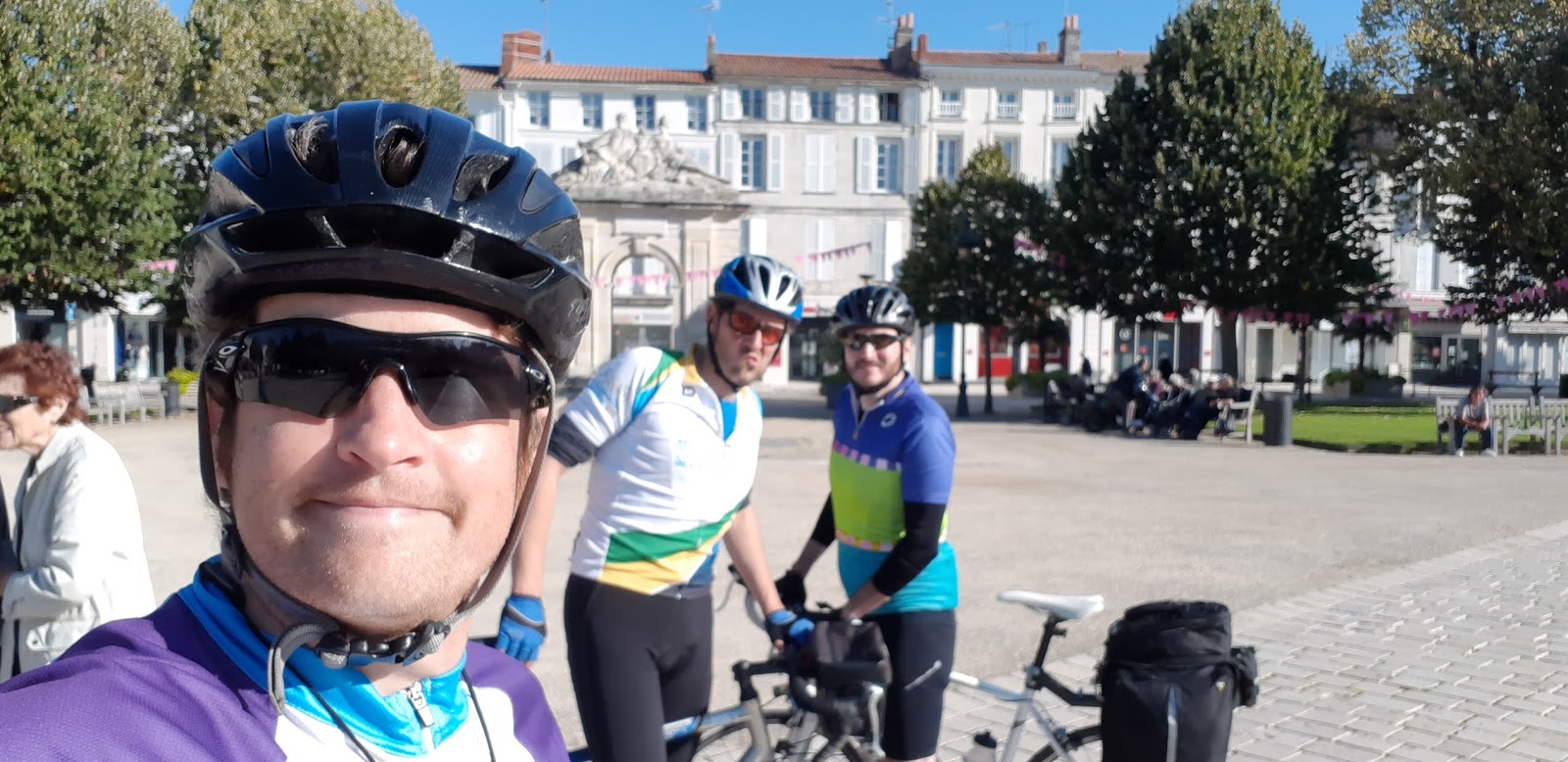
We awoke before dawn to an average breakfast and an eerily quiet Royan. We jumped tentatively on the bike and wheeled down abandoned streets down to the dock. It was decidedly cold. Slight shivers in the Lycra were made up for by the sun creeping up the sky over the Bay of Biscay.

At the end of its long journey to the Atlantic, the Gironde river was vast at this point. The Medoc was though visible in the distance across the blue-brown watery masse. The ferry ride was exhilarating. Along the way, beautiful views, a stiff coffee and anticipation of the day ahead. 

Thankfully, the collective injuries were just about holding together with a collection of strapping, ibuprofen gel and a spot of getting on with it.

LE MÉDOC

We rolled off into the winelands to a perfect blue sky and a warming sun. One of my best cycling days lay ahead, improved by each impromptu stop and interluding pedal.

An hour on the road and ever-increasing streams of vineyards indicated that our first winery visit was already overdue. Without any pre-plan or wine tour map, we selected at random what turned out to be a vast cooperative institution, selling wine by the crate to French hypermarche. Production for the masses, but we had the place to ourselves, taken around by a very friendly lady. After a fair selection of tasting, we were taken to two vast, jaw dropping halls. The first was the cellar, lined with row after row of giant barrels, containing the equivalent of 2 MILLION bottles of red wine. We literally chuckled with amazement at the sight. This second was the warehouse, this time chucked full of 2 MILLION actual bottle of wine. Outrageous. It made me thirsty.

With a bottle of red wine in each side saddle, we jumped back on the bike to put some KMs behind us. As we made progress the scenery turned stunning. Gentle, twisting slopes rulered by vines as far as the eye could see.

By later morning we made it to a pretty, seemingly well-to-do ville. Seeking another wine tour, we followed signs to a Chateaux in la centre de la ville. It was one heck of a grand looking place, with big gates and winery sign. We rang the buzzer. Nothing. Rang again… and again… and again until we got an answer. We asked for a wine tour. A more than a little snooty and not so slightly derisory voice responded “Do you have a reservation or are you a wine critic?” After a response in the negative, we were told to go elsewhere. Nice!

Onwards we rode, through a mixed countryside of farms and vineyards, before we had the fortune of stumbling upon more vineyard signs. We rode in and found a very classy winery in renovated stables. Despite out our sweaty cycling attire, the lady who worked there welcomed us in, gave us ample tasters and explanations as to the history of wine in the region (historic markings, nomenclature et al). Not done there, she recommended another winery down the road and even rang the place so we would be welcomed. Another bottle in the bag, we cycled to the next winery, had another tour, more tasters, another bottle in the bag and a new recommendation. And so it went on, creating a simply wonderful day through the beautiful countryside, drinking red wine and meeting nice people.

A little lost by this point (having been following assorted vineyard signs rather and only very approximately heading in the direction of Bordeaux), we found ourselves back by the Gironde somewhere near Pauillac. The river had narrowed by this point, and we took a late lunch at a small restaurant facing its banks. A tiny bit wore for wear, we Some late lunch by the river and we belatedly got back on the bikes, followed the river for a bit an then headed back in land to find one last vineyard. We found a proper grand chateaux and, resting our tired legs, were able to sip wine before a view of sun-drenched vines spilling into he middle distance. Not bad at all.

On we pedalled. By this point I fear we were looking less than civilized, with our water bottle holders each replaced by bottles of vin rouge, but we rolled with it. I do not know if it was the wine tasting or reality, but the countryside seemed to take one final burst of stunning. I recall gliding down a gently curving hill, bisecting the vines with elation. Cycling at its best purges everything out your mind and leaving a wonderful sense of now. It was exhilarating.

BORDEAUX

Sadly for the day, but happily for my dodgy knee and Dave’s dodgy ankle, we were approaching Bordeaux. Looking at the map, a sensible way in seemed along roads parallel and to the West of the river. Taking this route, the journey soon took a turn for the worse. A combination of large roads, rush hour, road works and cobbles brought us back to reality. There was even a spot of rain thrown in.

Fortunately - and I mean that given previous final destination falls in Paris, Brussels, Hamburg and Bilbao - we all stayed up right to the city centre. This is despite some ill-advised road furniture avoiding, pannier laden, bunny hops and a close call with my personal nemesis, mid-road tram lines.

After some mild disappointment at the outskirts, the centre of Bordeaux immediately blew me away. Grand buildings, beautiful boulevards and tucked away squares, all flanked by the arching Gironde. The sun came out, we found a café and savoured the combination of place, sun and mini achievement of having completed this cycle tour despite the ailments.

When you complete something – be it exams, a challenge, a trip or an adventure – I find the mind conveniently forgets about the doubts you housed at the outset, as if they were never there in the first place. This was a rare occasion to the contrary. Given the pretty major health issues I rolled into this trip with, I was genuinely relieved and more than a little surprised that we managed to finish the route.

After finding our hostel and uncorking one of the bottles we had picked up along our route, we had just enough energy left for a half decent night out in the splendid city, sticking on the red juice for which the region is famed. Mildly hungover, this was followed by an early farewell to Uwe, a minor hell-raiser tour along the river with Dave on a shared electric scooter, the usual nightmare to find bike boxes and a worse that usual rush hour public transport transit to the airport (try getting bike boxes onto a ram-packed tram!). I was all worth it. Another 390 km in the bag and none of us to worse for wear.

Monday, May 03, 2021

Riding injured through the Vendée to the Ocean - The Route IX (part 1)

LATE, WET AND DECIDEDLY TENTATIVE

Not the best start to the latest leg of our cross-Europe cycle tour. Dingo and I arrived in Nantes two hours late. By the time we high fived Uwe in Arrivals it was past Midday and nearly 1 pm before we had assembled our bikes, chucked the bike boxes and Dingo had completed his pre-ride faff (to be fair he was quicker than usual).

We had at least 100 km ahead of us that day and late October offered cold, rain and limited time before sunset. Adding to that, neither Dingo nor I were sure we were in shape to ride. Dingo had a dodgy Achilles and I had the combo of a crooked knee (a yet to be diagnosed ACL rupture) and more complicated issues I won’t bore you with here. We had discussed it on the plane and agreed WTF, we would give it a go and cycle to the nearest train station if I bodies failed.

On the bright side, the gang was back together and I pushed off from the airport excited, if tentative, at the hundreds of kilometres of open road ahead of us to Bordeaux.

STRAIGHT AND STEADY THROUGH THE VENDÉE

There is not much to report from the first few hours of cycling.  A steady pace, stuck in behind Uwe for much of the time (to conserve the energy and the injuries), past suburbia, then fairly non-descript villages and fields. So short on time, we stuck to the straight, semi-major roads and did not even stop for our usual village café pit-stop (not yet at least). Making do with a service station baguette, we pushed on and on through mercifully unhilly terrain.

While I cycled two things ran through my mind. My knee and a bit of history. Only two weeks after ditching the crutches, I was not confident it would hold out, but slowly but surely gained a little confidence as the kilometres past. This allowed some mental room to mull over the dark suppression of this region during the French Revolution. I would have been ignorant of it had I not just finished a study of the revolution, but now could not help but view the countryside in the shadow of the more than 100,000 local lives that were lost as the revolutionary government crushed a rebellion. A sombering thought in the rain.

The day took an upswing about 70 km in as the sun broke through and we gave ourselves the luxury of a brief café vin rouge. This left a final pleasant, if leggy, couple of hours. The highlight was passing through the beautiful village of Mareuil-sur-Lay-Dissais, complete with remarkable round church overlooking a tranquil river.

I for one was pretty relieved when we rolled into Luçon. It was our bare minimum destination for  the day, 100 km and change from Nantes. That was not far by our historical standards, but this was not a standard year. We were lead in from miles out by the magnificent, dominating spire of the Cathedral of Notre Dame (all 85 meters of it), restored by Richelieu himself.

We parked up in a café right outside the edifice and sipped some very satisfying red wine as the sun went down. After the shaky start, all seemed momentarily ordained to goodness, as we stumbled across the aptly named Hotel de Bordeaux and found available rooms to rent. Big pizza, ice-packs on the injuries and lights out.

A SPARKLING RIDE TO LA ROCHELLE

I woke up feeling better than expected, which was for the best given the ground we had to make up after our squeezed first day. Breakfasts on these trips are a particularly enjoyable part of the day, washing down course after course with lashings of coffee. I can’t help but think that a little competition comes in on both the quantity (Uwe wins), quality of choice (Dingo wins) and what extra fuel we can legitimately carry out (score draw). At least on French trips, this is then often topped up by a swift stop to the local boulangerie in anticipation of second breakfasts.

Having followed just that pattern, we headed south and into a flat coastal territory of cattle and egrets. In the morning sunshine we took a detour across a nature reserve and through some age old looking hamlets, before taking a sharp left and then right to avoid the encroaching sea. All in all, it was a lovely 40 km ride into the outskirts of La Rochelle. After the inevitable, roundabout, slightly lost route through the outskirts, we emerged into the simply stunning old port.

Mighty walls and guard towers gave way to harbour side and a plethora of sailing boats in the azure blue waters. We had reached the historic opening to the Bay of Biscay and the Atlantic Ocean. I will struggle to convey how perfect the next hour or so was. We parked ourselves and our bikes in a front row harbour café, sipped ice cold beer, ate glorious food and kicked back in our sweaty lycra in the late Autumn sun.

Before I left, I got chatting to a Brit who ran the local pub. He had come one day, fell in love with the place and never left. In that moment I completely got it. La Rochelle is special.

We undoubtedly stayed longer than was sensible, but were all smiles as we put bums back on saddles and headed out due south on a coastal path along the ocean. After a day and a half of roads, it was great to spend the best part of an afternoon on small mixed terrain paths. A bit of a headwind slowed us even further, but that was fine as we had the beach and ocean to our flank. Having been as far away as Stockholm on the route, it felt exhilarating to be on the Atlantic.

After a while the path noticeably narrowed and grew wilder as we wound our way along vegetation covered dunes. We persevered, but eventually ran out of path not far from Fouras, needing to take a left to avoid heading straight into the Charente river that cut in from the coast.

ROCHEFORT TO ROYAN

Via some bigger roads we made it into the city of Rochefort. Clearly a grand, if not large, place, our road took us straight to the even grander central square. A fitting spot for a lengthy ice-cream crepe and vin pit stop.

Much as we would like to end the day in Rochefort on a high, we had at least another 40 km to go to our much reach destination, Royan. Already late in the afternoon, we headed to the novelty of the vertical lift bridge across the Charente. While worth the trip for its peculiar spectacle, we were disappointed to find it closed and the need to double back a good way to get to the only other bridge across the river that bound in the city on three sides.

Unfortunately for us that was a motorway type bridge complete with speeding trucks. After a sharp word or two between us, we jumped across the reservation and grimaced as we pumped up and over the steep incline, gripping the handles tight in  anticipation of being knocked sideways by a speeding lorry. A very sketchy bit of riding.

From there it was pedals to the floor to beat the dark. I had largely forgotten the dodgy knee during the joys of the day, but an deep ache now came to the fore. This was made worse by us being forced onto a busy commuter road as the light failed. A difficult end to the day and it was a relief to wheel into the distinctly odd seaside town of Royan at night (think of Margate meets Milton Keynes). After the special places of the day, we hardly cared that Royan was a bit shit and were just happy to find a bed for the night and some late night chow.

Behind us were 230 km cycled against the odds (and the advice of my physio). Before us was the wide mouth of the Gironde river and then mile upon mile of Medoc vineyard. Could be worse.

Sunday, December 13, 2020

Our Orcadian Saga (Part 2) – Seabirds, Sea Creatures and South to the Caledonian Forest

Somewhat to my surprise, Orkney looked nothing like the highlands or the Western Isles I have visited. Gone are the barren moors, bens and glens, replaced by gentle rises and sweeping grassland. Cows instead of deer.

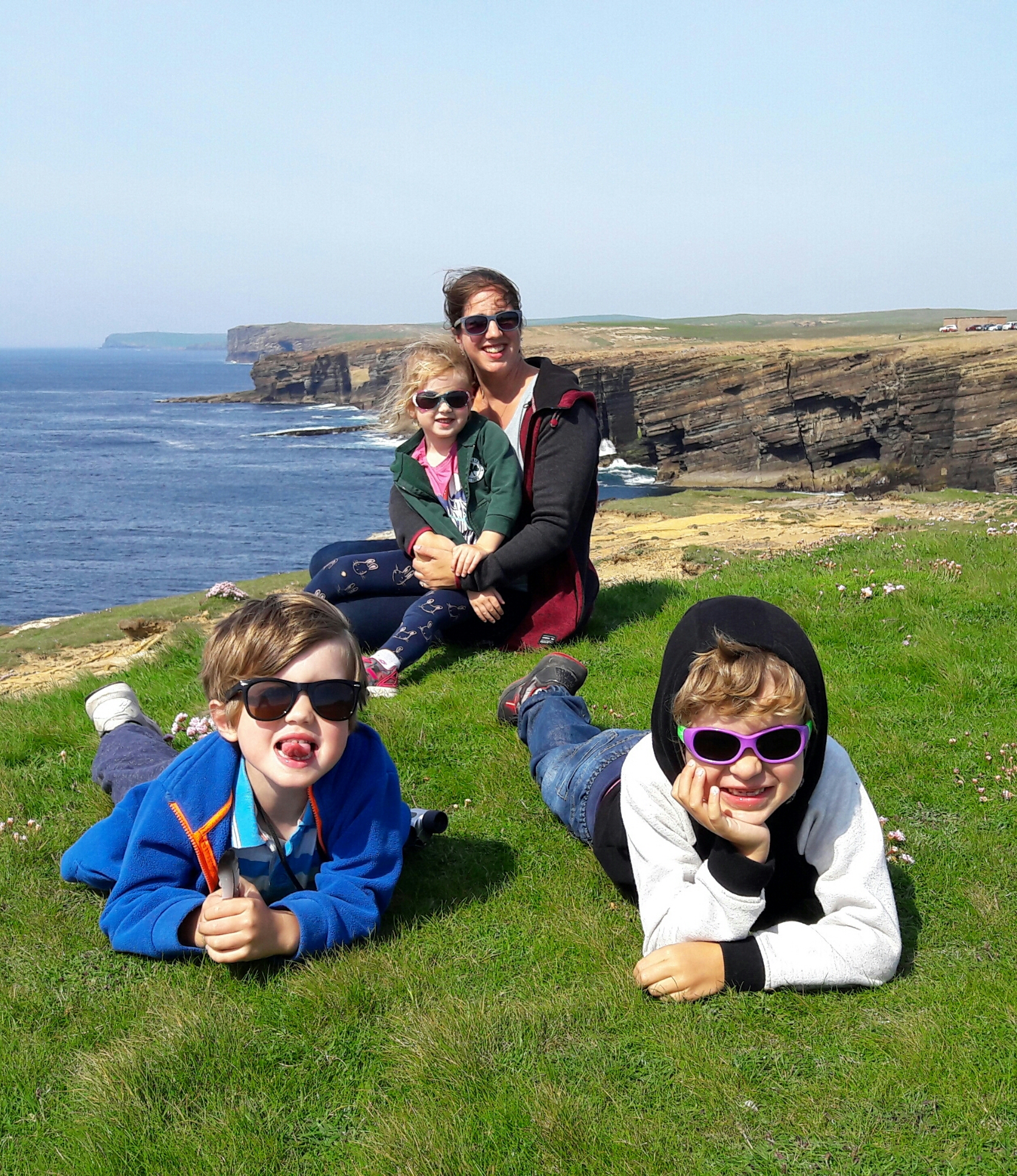
One massive exception we saw was the west coast of the Mainland (the main Orkney isle). The sloping grass gives way to sheer cliffs and raging waves. While not as high as the cliffs off Hoy, they are still thrilling and simply teeming with seabird life. Each day on Orkney we would choose a spot by the coast and go for a trek.  Across wide, arching beaches, then up headlands and along paths astride the cliffs, holding the kids hands tight.
The coast was full of features I recall from geography at school. Stacks, arches and blowholes. From semi-safe spots, we would sit and pass the binoculars around, spotting birds on cliffs stained white by their excrement, swirling on the wind and perched on the waves. Guillemots, kittiwakes, razorbills, shags, skuas, gannets, you name it. Not to be forgotten were the birds of the low shoreline and backing marshes – oystercatchers, redshanks, turnstones and more. These were great, but what we really wanted to see were puffins…

PATIENCE AND LUCK

Try as we might, we could not sight these evocative little birds. Cliff after cliff showed up many wonderful things, but no puffins. My daughter was equally excited by the semi-tame rabbits on a cliff top, but for the rest of us puffins was the main aim.
Puffins play a special role in British culture, being one of the more extravagant animals left on our dilapidated islands, and featuring in as diverse mediums as book publishers, cartoons and confectionary. I had therefore wanted to see one since I was a kid. It seemed our best opportunity was passing us by, until… on our final afternoon a passer-by on a cliff walk half way down the west coast of the Mainland, tipped us off that they had seen puffins on the Brough of Bursay.

The Brough of Bursay is a small island off the north-west tip of the Mainland, accessible by foot only at low tide. I checked the tide times and, as luck would have it, the tide was going out. I rang the rest of the family and arranged to meet them there asap.
Having transversed the narrow path to the Brough through the rock pools, we passed through the remains of a Viking settlement, over a fence and up a steep hill. 

Thanks Uncle Phil

We headed straight for the high cliffs on the north side. Only half hoping, we approached a vertical corrugation on the cliff wall and peered out to a jutting out portion of cliff. I could not believe my eyes. 

There was a puffin, and another. So much smaller than I had expected (barely bigger than my hand), but intensely charismatic. A pair were perched on a narrow ledge. One flew off, and as I followed its path, I saw another puffin flying in.

All in all, I think we saw at least 6. We lay there with the kids and cousins, giggling with excitement.

SEALS AND A CREATURE CARCASS
The seabirds were marvellous, but do not hog all the rights to cool wildlife on these isles. Driving around the island, we were fortunate to see seals on multiple occasions. Both grey and harbour seals fish of the coast and lounge around on beaches. The best place we found to spot them was just off the “main” Stromness to Kirkwall road, at the southern edge of the Loch of Stenness. Mildly inquisitive, they would roll over, or pop their heads out the water on seeing us.
Perhaps the most remarkable wildlife we saw was not even alive. Walking by a beach on the west coast, I spotted a large log type shape on the shore that did not look quite right. As we walked closer, I could not work out what it was, until a bad smell and closer inspection gave it away. It was a carcass of small whale. It looked most peculiar and, after doing some research, I found out that it was the mysterious Cuvier’s beaked whale. Living in the deeps of the far north and rarely ever seen, one washed up here was a stark reminder that leave these isles on the wrong heading and all you get is wild ocean for league upon league.

SCUBA SCAPA

Being a keen diver, I wanted to explore Orkney’s waters, as well as its shores, and I was lucky enough to do just that. The simply fantastic Scapa Scuba (who incidentally have the coolest dive shop I have ever seen –  a 100 year old bright red lifeboat station), took me to experience my fist ever dry-suit dives on the blockships that guard the eastern approaches to Scapa Flow.
An array of ships were sunk to prevent the Germans from attacking this key Royal Navy base in the two world wars. Sadly, they did not fully do their job, with U47 slipping through in October 1939, and sinking the HMS Royal Oak, with the loss of over 800 hands.

The blockships lie in shallow water between the small islands that run between the Mainland and South Ronaldsay. They have broken up over the years and been enveloped in wildlife. This make an excellent place to dive.
Spotting another seal as we pulled up in the van by a bridge and small inlet, we took our time prepping for the dive. I received great instruction in how to put on the cumbersome dry-suit and what to expect when in the water. We slipped into the shallows, I put my head under and received an immediate ice-cream headache for my sins. The water was all of 7 degrees C and made me grimace. I though got used to it soon enough and opened my eyes to a new world.

Thick sea weed and kelp, giant crabs, fish I had never seen before and huge numbers of starfish. The water clarity was good. I got used to the buoyancy of the dry-suit sooner than expected and followed the bottom as it descended towards great lumps of seaweed strewn metal. It was a thrilling sight.
In all I spent over an hour exploring the wrecks spread over two dives. While heavily broken up, many parts of the structure were still evident. There were great swim-throughs and many a sea creature surprise. A large lobster beneath the wreckage and, strangely most exciting for me, a sizeable cod scared off.

It was a brilliant experience. I got on really well with the dive school guys. They were happy enough with my intro to dry-suit diving for me to join them on the deep dives to what remains of the scuttled Imperial High Seas Fleet (see here), one of the top dive sights in the world. I could hardly contain my excitement. The only problem was weather and a lack of availability. Each day I waited with my fingers crossed. The latter freed up, but not the former. The sea gods were not with me, throwing up prohibitive wind and waves. Yet another reason to return to these wonderful islands.

SINCLAIRS AND SCOTCH
All over the Orkney were reminders of our ancestral link. The name Sinclair is everywhere. What best bought it home though, was finding the small farm house where my great-grandparents lived before departing for Australia. Thanks to my Uncle Peter’s research and careful instructions, we found the place on the eastern side of Scapa bay, round a sharp bend on the Old Scapa Road. After a week on Orkney, it no longer felt strange that my forebears had lived here for centuries, but seeing the house brought with it some sadness for what is gone.
As the mists rolled in, I thought of what a difficult life it must have been through the long, cold, dark winters. We found hints of how they may have survived. Alongside the old pubs, there is more than the Orcadians fair share of alcohol production. Adding to the old whisky distilleries and brewery, are  newer gin distilleries. I cannot recommend highly enough Orkney Gin Company’s Old Tom. Never since has our house been without it.
A HIGHLAND GEM

I was genuinely sad to leave. We had had a wonderful time. Adding to all the fantastic sites, adventures and wildlife, was quality time with my family. Seventeen of us had made the mini pilgrimage to Orkney on the beckoning of my Uncle Peter. Without him I am not sure I would have ever have made it, which would have being a crying shame.
On the boat back to Scrabster and the Scottish mainland, we once again passed the intimidating heights of the cliffs of Hoy, simply teeming with wildlife. Alas, we did not see the orcas. 
The road back south was a beautiful as before, but our stop over was a bit extra special – Glen Affric. Nestled to the west of Loch Ness, in the middle of the highlands, it is one of the last strongholds of the ancient Caledonian forest, giving it a very different feel to the barren lands elsewhere. 

This did not happen by accident. It is a wonderful example of rewilding and the potential it holds. Starting a quarter of a century ago, Trees for Life started installing fencing to keep out deer (who eat the saplings) and then augmented this with planting. Scots Pine have made a comeback. Instead of bare rock and gorse, there are glorious forests (find out more here). We stayed a night by the glen, trekking either side of the dark. 
One trek was deep into a dark, mature forest. We spotted pine marten scat (it is sad how excited I was) and came upon a waterfall through the trees. It was magnificent.
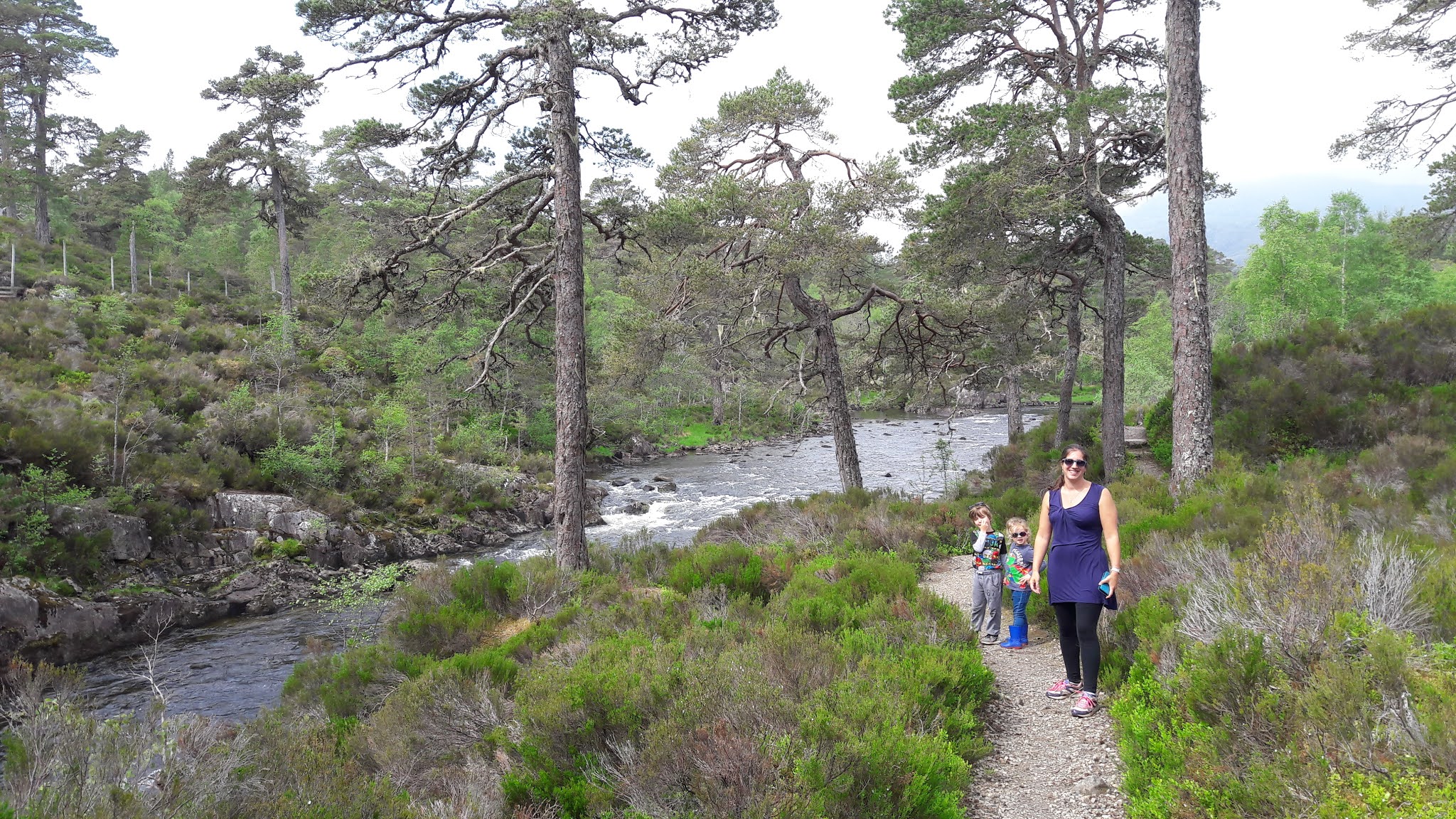
The other was into the heart of the glen. We followed paths down through wooded hills, across banks of ragged granite and down to the rushing water. 
At a high point, the whole glen opened up before us. It was spectacular. It felt like that so rare thing in the UK, wilderness. I was so glad to be able to take my children to such a place. So glad in fact, that it deserves a montage...
All too soon, we were driving south again and then along Loch Ness to Inverness and our flight home. As the flight took off I took with me a stronger affiliation with the country of both my grandfathers.